
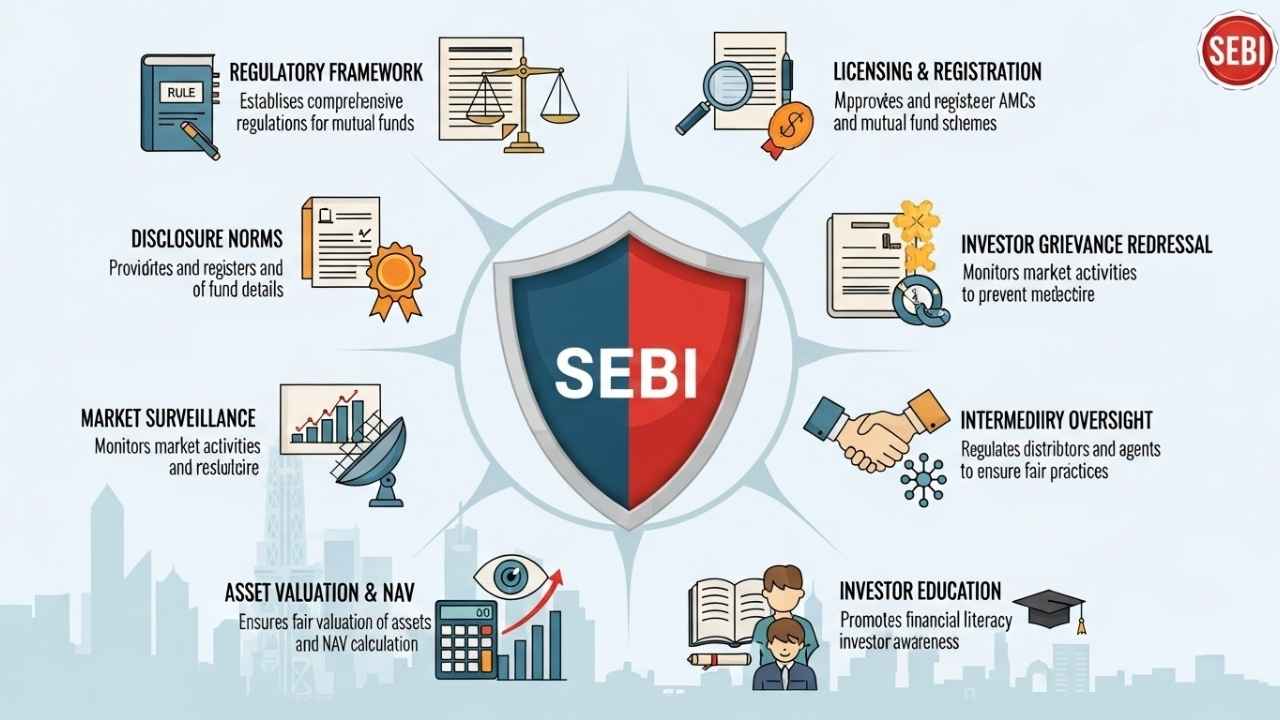
Hello all! If you’re a fan of investing or a newbie wanting to try out mutual funds in India, chances are you’ve already come across SEBI. The Securities and Exchange Board of India has a very significant role in making everything level and secure in the world of investments. Founded in 1992, SEBI is such a watchdog that monitors the stock market, mutual funds included. In this blog entry, we will explore what SEBI does particularly for mutual funds and how it protects investors from risk. Whether you’re a beginner or a veteran investor, knowing this can guide you towards making wiser decisions.
We’ll start with the fundamentals, dissect major points, add a useful table, summarize with a conclusion, and provide answers to some frequently asked questions. Here we go!
Key Roles of SEBI in Mutual Fund Regulation
SEBI does not merely make rules; it actually determines how mutual funds work to ensure that they are reliable and investor-friendly. Below, I describe the key ways SEBI regulates this area, with real-life context on why it matters. Each of them is supported by how it directly safeguards you as an investor.
1. Registration and Oversight of Mutual Funds
SEBI mandates registration of all mutual funds before they begin to operate in India. This includes a thorough scrutiny of the structure of the fund, including the sponsor (who creates it), the trustee (who protects investor interests), and the asset management company (AMC) that manages day-to-day investments. According to SEBI (Mutual Funds) Regulations, 1996, funds have to adhere to strict norms about how they’re constituted and operated, such as being established as public trusts.
Why is it so? It keeps fly-by-night operators out of the market and mismanaging your funds. For instance, if a fund fails to qualify under SEBI, it cannot start, which has thwarted many suspect plans in the past. This regulation keeps only trusted operators handling your investments, which puts you at ease. Practically, this implies your money is in capable hands, minimizing the risk of fraud and ensuring stability in the market.
2. Ensuring Transparency and Disclosures
One of SEBI’s significant priorities is ensuring that investors receive precise, timely information. Funds must reveal all – from their goals and historical record to costs and risk. SEBI requires standardized fact sheets and prospectuses so you can directly compare alternatives. They also classify funds into categories such as equity, debt, or hybrid, limiting each fund house to a single scheme within a category to prevent confusion.
This transparency safeguards you by avoiding the surprise of hidden expenses. Consider investing without knowing that the charges might devour your gains – SEBI regulations bar that by insisting on full disclosure. I’ve known people make better choices because of this information, such as selecting low-cost funds that suit their objective. It creates confidence and allows you to invest prudently, particularly in a situation where information asymmetry might otherwise result in poor decisions. In general, it’s all about creating a level playing field so individual investors are not at a disadvantage.
3. Investor Protection Mechanisms
SEBI has inherent protections such as having trustees independent of the AMC to prevent conflict of interest. They encourage diversification in the portfolio to disperse risks and establish standards of how funds deal with investor money honestly. Also, SEBI conducts investor education camps and has grievance redressal facilities where you can file a complaint directly.
All these steps are essential because they protect you from mismanagement or scams. For example, when the market is in decline, SEBI-mandated diversified funds reduce losses. When things turn sour, SEBI’s swift response in the form of fines or bans on offending funds gives confidence a boost. It is not a mere concept – it has protected millions from losses through fraud. By keeping your interests at the forefront, SEBI makes mutual funds a better bet for long-term aspirations such as retirement or education funds.
4. Monitoring and Enforcement Actions
SEBI monitors mutual funds closely by conducting audits, inspections, and checks for compliance on a regular basis. If a fund violates rules, SEBI may penalize the fund, suspend activities, or even revoke registrations. They also monitor market conduct to avoid practices such as insider trading or unfair trades that might influence fund performance.
This constant monitoring guards investors by catching issues at the root level. Consider previous instances where SEBI intervened in times of crisis, such as the financial meltdown in 2008, to shore up funds. Otherwise, investors would be subjected to unbridled risks. Enforcement holds people accountable, discouraging bad practices and ensuring market integrity. It is similar to having a referee on the field – level play is good for all, particularly small investors who could otherwise be at risk.
5. Promoting Fair Practices and Market Development
SEBI defines ethical standards, such as banning fraudulent practices and promoting best practices in fund management. They also engage in market development by launching new types of funds and streamlining processes while keeping investor protection in sight.
Fair practices ensure you have an even playing ground, unmanipulated. For instance, SEBI’s insistence on ethical advertising prevents funds from promising unrealistic returns. This encourages mutual fund growth, which has grown to a boom in India but always with safeguards. It benefits investors by creating opportunities without sacrificing security, ultimately giving them greater returns and a healthier economy.
6. Recent Developments in 2025
SEBI in 2025 brought in innovations such as the Mutual Fund Lite structure, which makes it easy for new funds to enter while having robust investor protections. They also revamped ESG disclosures and broadened insider trading definitions to include more situations, making mutual funds more transparent overall.
These reforms make the system more cost-effective and investor-friendly. For example, less restrictive rules for passive funds lower costs, passing savings to you. But SEBI never compromised on safety – tougher UPSI policies protect against misuse of information that can hurt fund values. This reflects SEBI’s flexibility, making sure regulations keep pace with the market while putting your protection first. It’s good news for investors, as it may translate into more convenient, low-cost investments without increased risks.
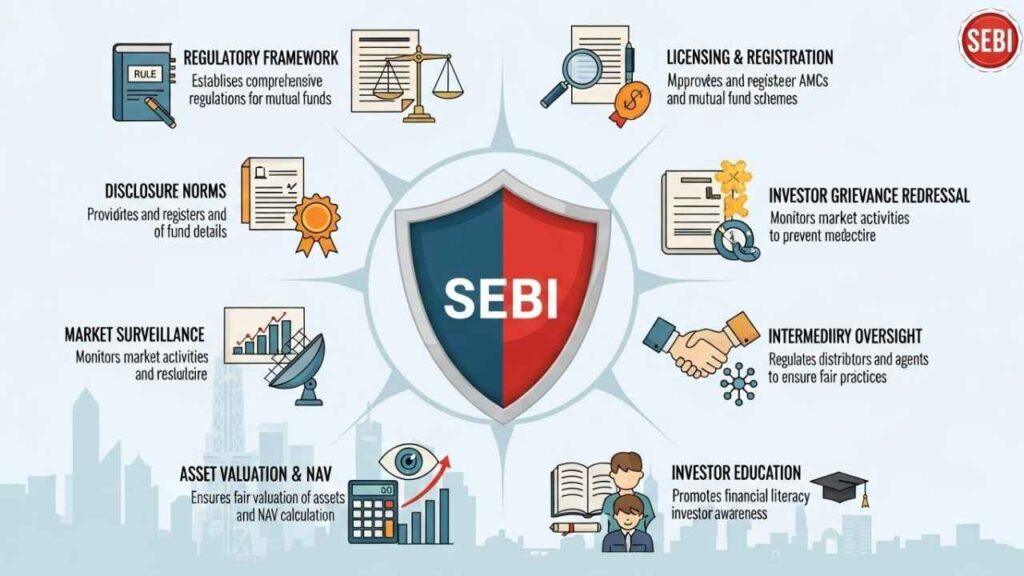
Summary Table of SEBI’s Key Protections for Mutual Fund Investors
Here’s a quick table outlining major ways SEBI safeguards you. Use it as a reference when evaluating funds.
| Protection Measure | Description | Benefit to Investors |
|---|---|---|
| Fund Registration | Mandatory approval and structure checks | Ensures only reliable funds operate |
| Disclosure Rules | Full info on risks, fees, and performance | Helps make informed decisions |
| Independent Trustees | Separate from fund managers | Prevents conflicts and protects interests |
| Diversification Norms | Spread investments across assets | Reduces risk of big losses |
| Enforcement Penalties | Fines or suspensions for violations | Deterrs fraud and ensures compliance |
| 2025 Updates (e.g., MF Lite) | Simplified rules with strong safeguards | Lower costs and better access |
Conclusion
In short, SEBI is the pillar of mutual fund regulation in India that works day and night to safeguard investors such as you and me. Right from registration to enforcement and recent changes in 2025, their work forms an open, just atmosphere where your money can grow without any hazards.
There are always some risks in investing, but SEBI reduces them through intelligent rules and monitoring. If you’re going to invest, remember these things – knowledge is the key. Be informed, diversify, and good luck investing!
Learn More:
- How to Start Investing in Mutual Funds in India – Step-by-Step Process for Beginners
- Difference Between Mutual Funds and Stocks – Which is Better for Beginners?
- Understanding NAV (Net Asset Value) in Mutual Funds – What It Means and Why It Matters
- Risks Involved in Mutual Fund Investments – Common Risks and How to Manage Them
FAQs
1. What is SEBI, and why does it regulate mutual funds?
SEBI is India’s securities regulator, set up to protect investors and ensure fair markets. It oversees mutual funds to prevent fraud, promote transparency, and maintain stability.
2. How does SEBI protect small investors in mutual funds?
Through mandatory disclosures, independent trustees, diversification rules, and quick enforcement against violations, SEBI ensures your interests come first.
3. Are there any new SEBI rules for mutual funds in 2025?
Yes, like the Mutual Fund Lite framework for simpler operations and expanded insider trading definitions, all aimed at better protection and efficiency.
4. What should I do if I have a complaint against a mutual fund?
Contact the fund’s grievance cell first, then escalate to SEBI via their SCORES portal for resolution.
5. Can SEBI guarantee no losses in mutual funds?
No, markets have risks, but SEBI’s regulations minimize fraud and mismanagement, making investments safer overall.












Ayush