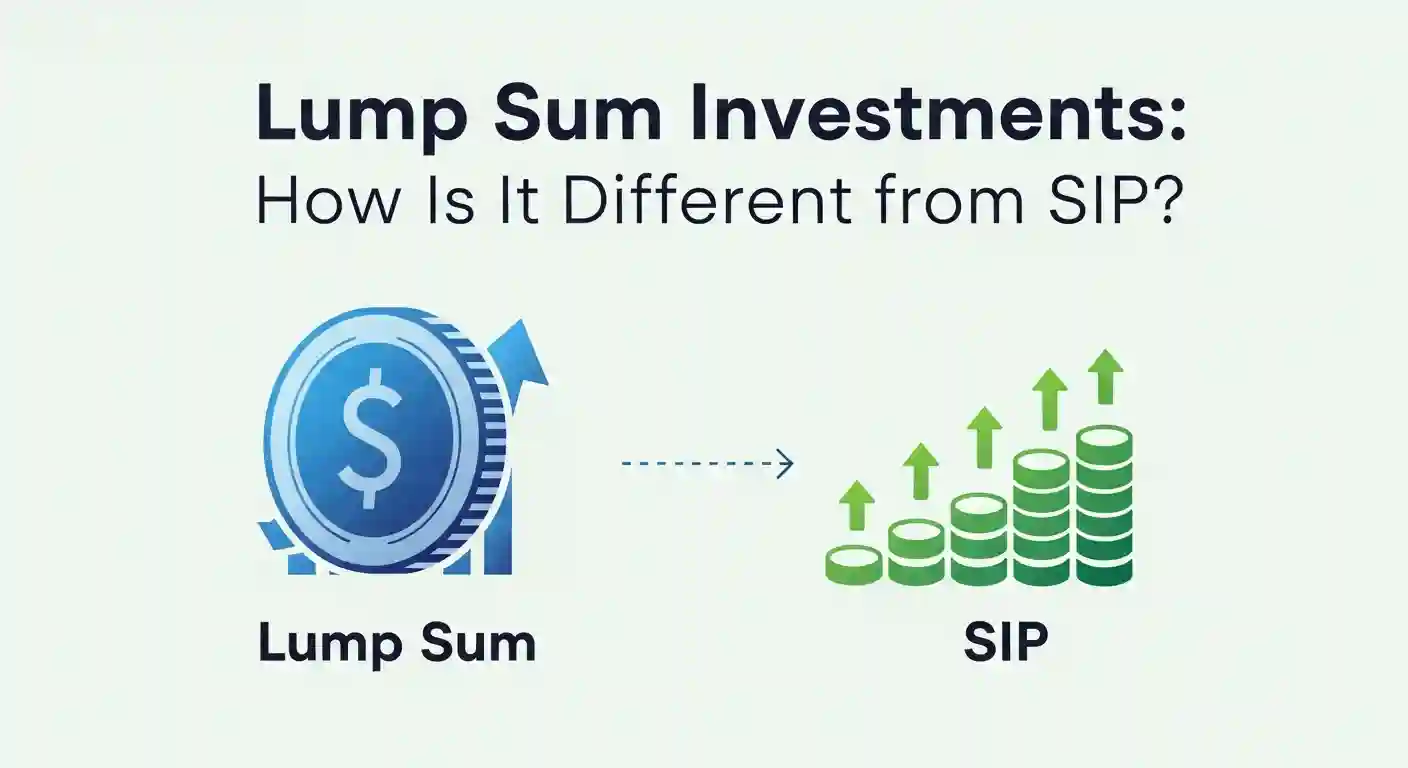
When it comes to investing in mutual funds, you may hear two popular terms: lump sum investment and SIP (Systematic Investment Plan). Both are excellent methods of growing your money, but they function in entirely different manners. If you are wondering which one is suitable for you, then it is essential to learn about the differences between the two.
In this article, we will discuss what a lump-sum investment is, how it differs from an SIP, its benefits, and the key points to consider before opting for it. Let’s discuss it in detail.
What Is a Lump Sum Investment?
The term “lump sum” is just a way of saying that a lot of money is being paid or invested at one time.
When you make a lump sum investment, it means that you are investing a lot of money at one time instead of investing it over a period of time. For instance, if you have saved ₹5 lakhs and you invest the entire amount in a mutual fund at one time, then you have made a lump sum investment.
A lump sum payment is essentially the same thing, but on the payment side. For instance, instead of paying EMIs, you pay the entire loan amount.
How Is Lump Sum Investment Different from SIP?
SIP (Systematic Investment Plan) is almost the opposite of lump sum. Here are the main differences:
1. Mode of Investment
- SIP: You invest a fixed amount regularly—usually every month. It’s like putting small portions of your salary into mutual funds automatically.
- Lump Sum: You invest the entire amount in one single transaction. No installments, no regular payments.
2. Who It Suits Best
- SIP: Ideal for beginners or salaried people who want to start small and stay safe. It reduces risk because you’re not putting in all your money at once.
- Lump Sum: Usually preferred by experienced investors who understand market movements and are comfortable investing a large amount at one time.
3. Investment Time Period
- SIP: Flexible—schemes can be open-ended, close-ended, or hybrid. You can keep investing for as long as you want.
- Lump Sum: The entire amount is locked in for a chosen period. Once invested, it stays invested until you decide to withdraw.
| Feature | Lump Sum Investment | SIP (Systematic Investment) |
|---|---|---|
| Mode of Investment | One big amount invested at once | Small amount invested every month |
| Investment Amount | High (one-time) | Low or medium (monthly) |
| Ideal for | People with idle money (bonus, maturity, inheritance) | Regular salaried or self-employed people |
| Risk Level | Depends on market timing (you enter at one point) | Lower risk due to cost averaging (you enter at different levels) |
| Time Period | Money is locked as per the scheme tenure (for example, 3–5 years) | You can stop SIP anytime, but the invested amount stays |
Which Gives Better Returns: Lump Sum or SIP?
There’s no straight answer—it depends on the market.
- When the market is rising steadily, lump sum investments often give higher returns because your entire amount starts growing from day one.
- When the market is volatile or falling, SIP performs better because you buy more units when prices are low (rupee cost averaging).
Returns also depend on the fund you choose, your investment horizon, and market conditions. Both options have their own strengths, so you can’t really say one is always better.
Advantages of Lump Sum Investment Over SIP
While SIP is popular for its discipline, lump sum has some clear benefits:
- Simplicity
Invest once and relax. No need to remember monthly payments or worry about missing an installment. - Lower Costs
Only one transaction means lower charges. SIPs can have recurring transaction fees and sometimes exit loads. - Better Capital Growth in Rising Markets
Your full amount is invested from the start, giving it more time to grow and recover from any short-term dips.
Factors to Consider Before Choosing Lump Sum Investment
Investing a large amount at once can feel scary. Here are the key things to keep in mind:
- Patience
Markets go up and down. You need the patience to stay invested through tough periods instead of panic-selling. - Market Valuation
Try to invest when the market looks reasonably priced. Look at indicators like the P/E ratio of major indices over the past few quarters. - Expected Returns
Research the fund’s past performance and understand what kind of returns you can realistically expect. - Liquidity Needs
Make sure you won’t need the entire amount suddenly. Choose funds that allow withdrawal without heavy penalties if required.
Final Thoughts
Both lump sum and SIP are excellent tools for creating wealth through mutual funds. While SIP is ideal for disciplined investing with low risk, a lump sum investment is ideal when you have a substantial amount of money to invest and feel that the market conditions are ripe for investment.
It is ultimately up to you to decide which option is best for you, based on your financial goals, risk tolerance, and current financial situation. Some people even choose to combine the two options—SIP for regular investments and lump sum for investments made out of bonuses.
Regardless of which option you choose, the key is to begin early and remain invested for the long term.
Learn More:
- How to Transfer Home Loan from One Bank to Another?
- How to Pay Electricity Bill through Credit Card
- How to Increase Credit Card Limit
- Home Loan Benefits for Women in India
- Best Banks for Gold Loan in India 2025
- Get SBI Yono Personal Loans? Helpful Tips to Get the Loan Fast
- 7-step checklist for fast ICICI Bank personal loan approval
- Airtel Payment Bank Loan: How to Get a ₹5,000 Loan in Just Minutes