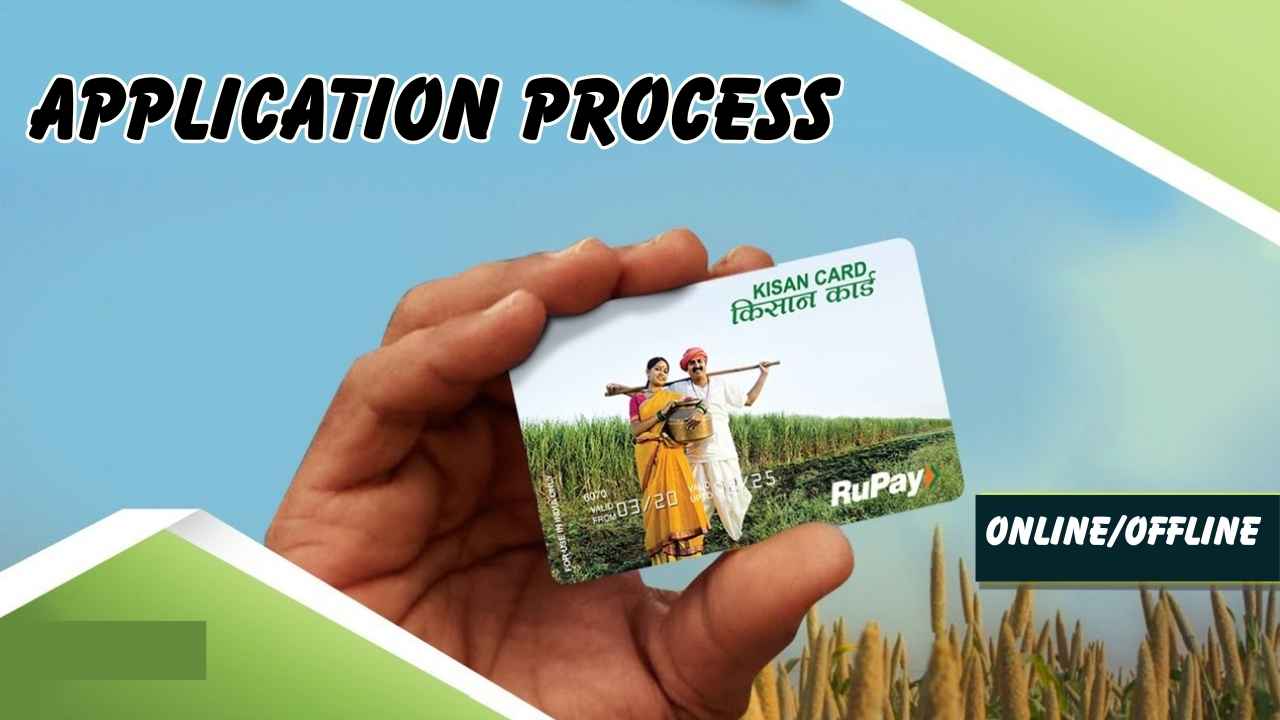
The Kisan Credit Card (KCC) is an institutionalised credit facility introduced in August 1998 by the Reserve Bank of India in association with NABARD with the objective to extend timely and low-cost credit to farmers all over India. The agricultural credit facility allows farmers to finance their cultivation costs, post-harvest expenses, and working capital requirements at subsidised interest rates, making it a rural financial inclusion tool.
How to Apply for Kisan Credit Card Online: Complete Step-by-Step Application Process
Online Application Process
The KCC online application process has been significantly streamlined across major banks, allowing farmers to apply digitally from their homes.
Step 1: Visit Bank’s Official Website
Navigate to your preferred bank’s official website and locate the Kisan Credit Card section. Major banks like SBI, HDFC, ICICI, Bank of India, and Indian Bank offer online KCC applications.
Step 2: Select Application Type
Choose between “Crop Production KCC” for seasonal farming needs or “Animal Husbandry and Fishery KCC” based on your agricultural activities.
Step 3: Fill Personal Information
Complete the online application form with accurate details including:
- Full name and date of birth
- Aadhaar card number and PAN details
- Mobile number and email address
- Complete address with PIN code
Step 4: Provide Land Details
Enter comprehensive land information including:
- Land ownership documents (7/12 extract, 8A, 6D)
- Total cultivable area in hectares
- Crop pattern and cultivation details
- Land survey numbers and revenue records
Step 5: Upload Required Documents
Scan and upload all mandatory documents including identity proof, address proof, land ownership papers, and recent passport-size photographs.
Step 6: Submit Application
Review all entered information carefully and submit the completed application form online.
Step 7: Application Verification
The bank will verify your documents and conduct field verification of land records. This process typically takes 7-15 working days.
Step 8: Credit Assessment
Banks assess your creditworthiness based on land holdings, crop pattern, and repayment capacity to determine the credit limit.
Step 9: KCC Approval and Dispatch
Upon approval, the physical KCC along with a passbook and cheque book will be dispatched to your registered address.
Offline Application Process
Visit your nearest bank branch with all required documents, meet the agricultural loan officer, fill the KCC application form, submit documents for verification, and complete the process with bank assistance.
Learn More: How to Apply for the Dhani Super Save Credit Card: Complete Guide
Kisan Credit Card Online: Pros and Cons
Advantages
- Subsidized Interest Rates: Loans up to ₹3 lakh are available at just 4% per annum effective rate due to government interest subvention of 3%, making it one of the cheapest credit facilities available.
- Flexible Credit Limit: Credit limits are determined based on land holdings and can range from ₹20,000 minimum to ₹10 lakh or more, with most banks offering up to ₹3 lakh without collateral.
- Multiple Use Cases: The card can be used for crop cultivation, post-harvest expenses, farm equipment purchases, animal husbandry, fisheries, and household consumption needs.
- Revolving Credit Facility: Functions as an overdraft account allowing farmers to withdraw money as needed and pay interest only on the utilized amount.
- Long Validity Period: The card remains valid for 5 years with annual renewal, providing long-term financial security to farmers.
- Insurance Coverage: Automatic coverage under Pradhan Mantri Fasal Bima Yojana and personal accident insurance for cardholders under 70 years.
- Wide Accessibility: Can be used at ATMs, bank branches, and through Business Correspondents for convenient access to funds.
Disadvantages
- Complex Documentation: Requires extensive paperwork including land records, crop details, and multiple verification processes that can be challenging for non-literate farmers.
- Annual Renewal Requirement: Must be renewed every year within the validity period, which can be cumbersome for some farmers.
- Misuse Potential: Lack of proper financial literacy may lead to misuse of credit for non-agricultural purposes, affecting repayment capacity.
- Weather Dependency: Natural calamities and crop failures can severely impact repayment ability, leading to debt stress.
- Limited Coverage for Large Investments: The credit limit may be insufficient for major farm mechanization or infrastructure development projects.
Learn More: 7-step checklist for fast ICICI Bank personal loan approval
Kisan Credit Card Online: Charges and Fees
Interest Rates
- Subsidized Loans (Up to ₹3 Lakh): Effective interest rate of 4% per annum with government providing 3% interest subvention, making the actual rate 7% per annum.
- Higher Amount Loans: Interest rates range from 7% to 15% per annum depending on the bank and loan amount, with most nationalized banks offering rates between 7-9%.
Processing and Service Charges
- Processing Fee: Up to 2% of the sanctioned limit, though waived for loans up to ₹3 lakh under government guidelines.
- Annual Supervision Charges: ₹500 to ₹2,000 every 6 months based on the limit amount, with some banks charging ₹800 + GST annually.
- Legal and Documentation Charges: ₹2,500 to ₹4,100 for legal fees depending on loan amount and state, plus actual stamp duty charges.
Penalty Charges
- Overdue Penalty: 2-5% per annum additional charges on overdue amounts until full payment is made.
- Cheque Bounce Charges: ₹500 per instance of bounced cheque or failed electronic payment.
- Foreclosure Charges: 2-4% of outstanding amount if the loan is closed within one year of sanction.
- Non-Maintenance Charges: ₹750 for not maintaining proper repayment mode and ₹2,000 yearly if account churning is less than 50%.
What if I Take the Card but Do Not Use It?
If you obtain a KCC but don’t utilize it, several consequences and charges apply:
- Annual Supervision Charges: Even without usage, you’ll be liable to pay annual supervision charges ranging from ₹500 to ₹2,000 depending on your sanctioned limit. Some banks like IDFC First Bank charge ₹800 + GST annually regardless of usage.
- Penalty for Non-Usage: YES Bank charges ₹2,000 annually if account churning is less than 50% of the sanctioned limit in a financial year, effectively penalizing non-usage.
- Renewal Requirements: The card must still be renewed annually even if unused, requiring documentation updates and potential charges.
- Credit Score Impact: While non-usage doesn’t directly harm your credit score, failure to pay annual charges or renewal fees can negatively impact your creditworthiness.
- Digital Renewal Option: Many banks now offer digital renewal facilities, allowing you to renew the card online without visiting branches, making maintenance easier even for unused cards.
- Account Dormancy: Extended non-usage may lead to account classification as dormant, requiring additional procedures to reactivate when needed.
Learn More: Airtel Payment Bank Loan: How to Get a ₹5,000 Loan in Just Minutes
Conclusion
The Kisan Credit Card is one of India’s most important agricultural credit reforms, offering farmers cheap and easily accessible credit to meet their varied requirements. With interest rates of only 4% for loans up to ₹3 lakh and repayment schedules that track crop cycles, KCC has emerged as a vital financial instrument for more than 7 crore farmers across the country.
Digitization of the application and renewal process has further eased access, enabling farmers to make transactions online and cut down on reliance on physical bank trips. Nonetheless, farmers should carefully think through the yearly fees and renewal terms to ensure they truly possess genuine credit needs before applying to prevent unnecessary expenses.
For the regular farmers and regular agricultural activity, the KCC provides unparalleled advantages with regard to cost, convenience, and coverage. The linkage to government schemes such as PM-Kisan and crop insurance allows it to be a holistic financial facility that takes care of various aspects of agri-financing, and thus highly recommended for serious farming operations.