If you are a mutual fund investor, you might have come across the term expense ratio. Don’t get confused—initially, it will look technical, but it’s really quite straightforward. Just like every business incurs expenses—such as employee salaries, rent for an office, and operations—there are expenses for managing your money for mutual funds as well. These expenses are paid for through the expense ratio.
Knowing the expense ratio matters since it impacts your returns directly. A minimal variation in expense ratio can have a significant impact on your wealth over the long term. In this blog post, we will discuss what expense ratio in mutual funds is, how it functions, and why you should consider it while selecting a mutual fund.
What is Expense Ratio in Mutual Funds?
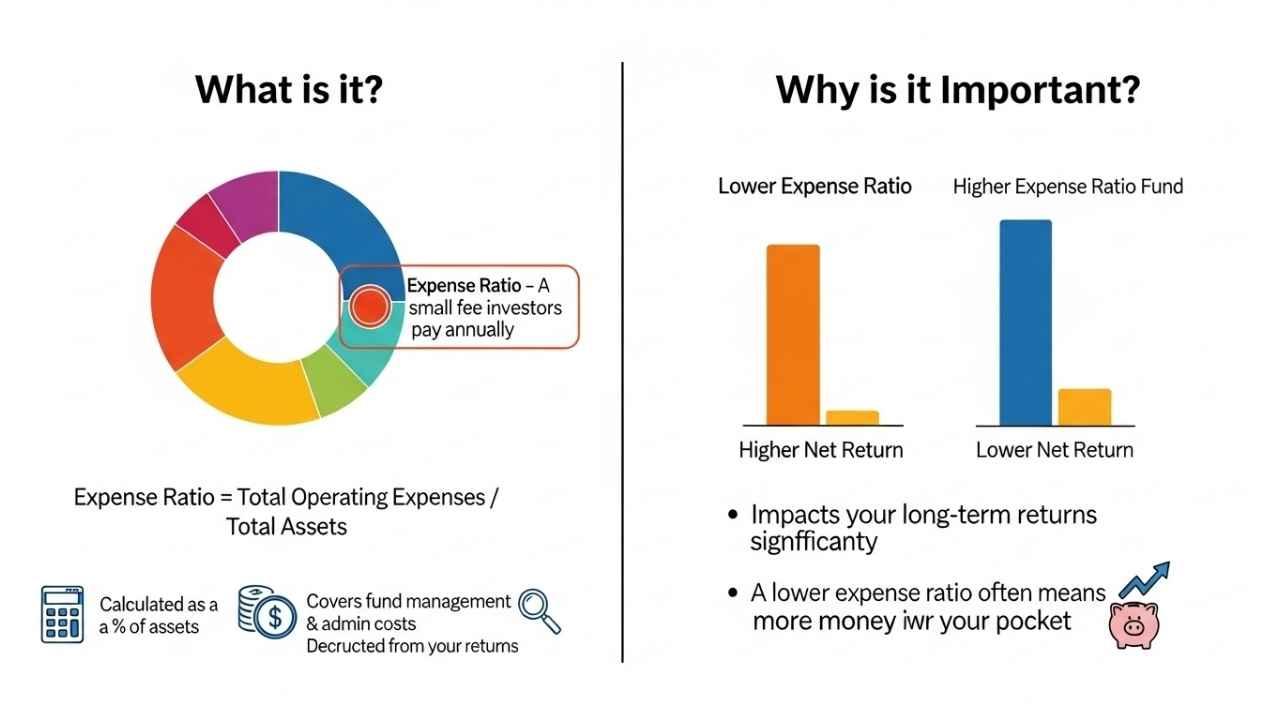
The expense ratio is the yearly fee incurred by a mutual fund company to take care of your money. It is indicated in terms of a percentage of assets under management (AUM).
This fee includes costs like:
- Fund manager’s salary
- Administrative charges
- Marketing and distribution expenses
- Other operational costs
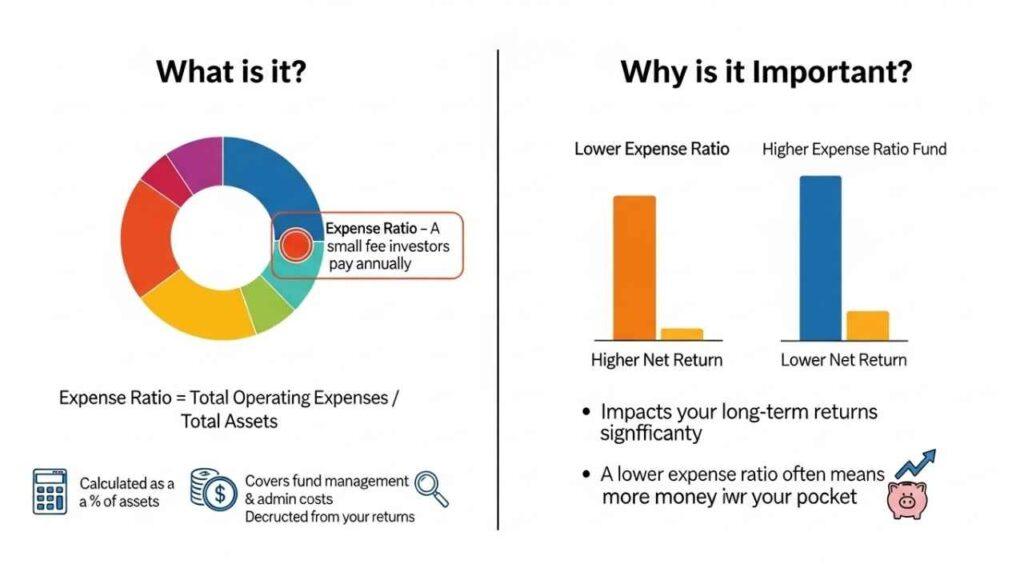
For example, if a fund house charges an expense ratio of 1% on a mutual fund, it implies that the fund house takes 1% of the total investment annually to manage your money.
Therefore, if you invest ₹1,00,000 in a fund with an expense ratio of 1%, ₹1,000 is spent on expenses, and the remaining amount remains invested.
How Does Expense Ratio Work?
The expense ratio gets automatically deducted from the Net Asset Value (NAV) of the mutual fund. You don’t need to pay it separately.
For example:
- A mutual fund earns 12% returns in a year.
- The expense ratio is 1.5%.
- Your effective return will be 10.5% (12% – 1.5%).
This means the higher the expense ratio, the lower your actual returns. That’s why investors often prefer funds with lower expense ratios.
Types of Expense Ratio
There are mainly two types of expense ratios in mutual funds:
- Regular Plan Expense Ratio
- Includes commission for distributors/agents.
- Usually higher than direct plans.
- Good for investors who need guidance.
- Direct Plan Expense Ratio
- No middlemen, so no distributor commission.
- Lower expense ratio compared to regular plans.
- Ideal for investors who can manage investments themselves.
Tip: Direct plans usually give higher returns over the long term due to lower costs.
Why is Expense Ratio Important?
The expense ratio may look small, but it has a big impact on your long-term wealth. Here’s why it matters:
- Affects Returns – Higher expense ratio means lower returns for you.
- Compounding Effect – Over years, even a 1% difference can lead to lakhs of rupees difference in wealth.
- Comparison Tool – Helps you compare different funds. Two funds with similar returns, but different expense ratios, can perform very differently in the long run.
- Transparency – Shows you how much the fund house is charging to manage your money.
Example: The Impact of Expense Ratio
Let’s compare two funds:
- Fund A: 12% annual return, 1.5% expense ratio
- Fund B: 12% annual return, 0.5% expense ratio
- Investment: ₹5,00,000 for 15 years
| Fund | Gross Return | Expense Ratio | Net Return | Final Corpus |
|---|---|---|---|---|
| Fund A | 12% | 1.5% | 10.5% | ₹22.1 lakh |
| Fund B | 12% | 0.5% | 11.5% | ₹24.2 lakh |
Just a 1% difference in expense ratio resulted in a gap of ₹2.1 lakh in 15 years.
Ideal Expense Ratio
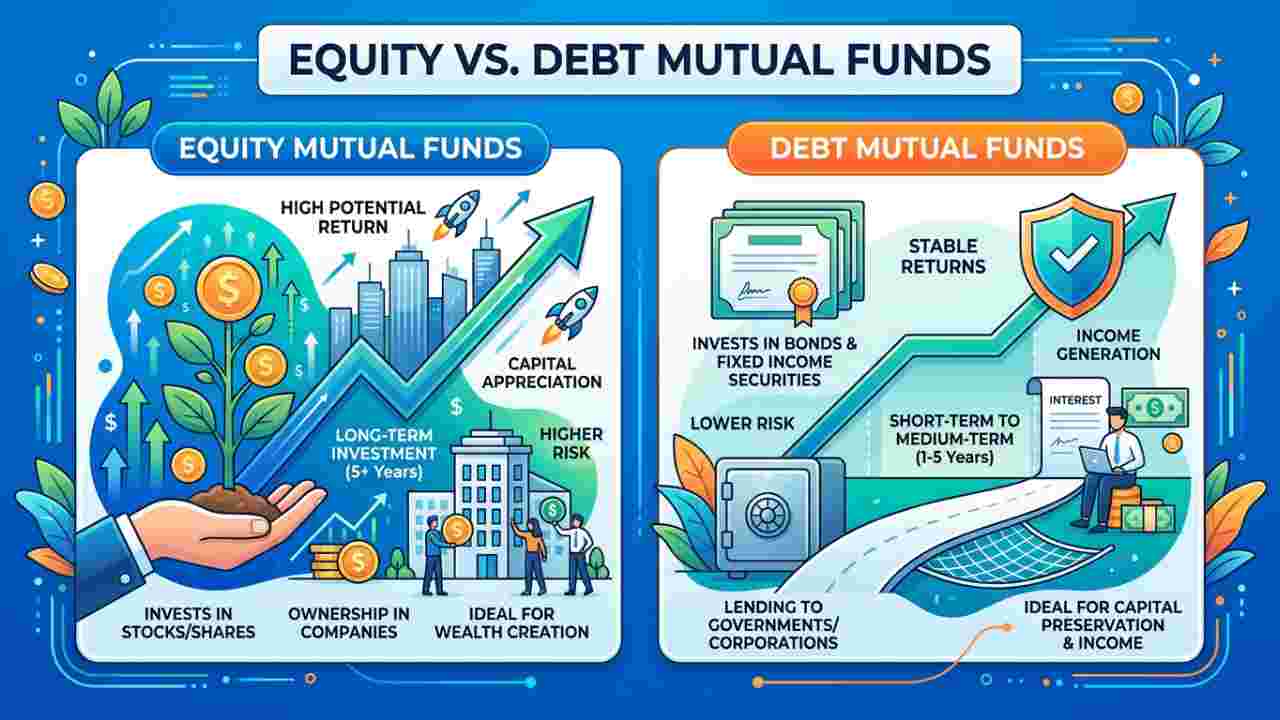
- Equity Funds: Usually between 1% – 2.5%
- Debt Funds: Usually between 0.2% – 1%
- Index Funds/ETFs: Lowest, often below 0.5%
Choosing funds with lower expense ratios makes sense, but you should also check performance and consistency. A slightly higher expense ratio can be justified if the fund is delivering better long-term returns.
How to Check Expense Ratio?
You can find the expense ratio of any mutual fund:
- On the fund’s fact sheet
- On the AMC’s (Asset Management Company) website
- On mutual fund tracking apps and portals
Always compare the expense ratio before investing.
Conclusion
The expense ratio in mutual funds is nothing but the fee you pay for expert fund management. It is small enough to ignore, but over time it can take a huge toll on your returns. Lower expense ratios are usually better, particularly for long-term investments.
However, don’t select a fund solely on the basis of expense ratio. Consider performance, consistency, fund manager’s performance, and your investment objectives.
Keep in mind: when investing, every percentage counts, and the expense ratio is one figure you never want to overlook.
Learn More:
- How to Start Investing in Mutual Funds in India – Step-by-Step Process for Beginners
- Difference Between Mutual Funds and Stocks – Which is Better for Beginners?
- Understanding NAV (Net Asset Value) in Mutual Funds – What It Means and Why It Matters
- Risks Involved in Mutual Fund Investments – Common Risks and How to Manage Them
FAQs
1. What is a good expense ratio for mutual funds?
Anything below 1% for debt funds and below 2% for equity funds is generally considered good.
2. Is a lower expense ratio always better?
Not always. If a fund has a slightly higher expense ratio but delivers consistently better returns, it may still be worth it.
3. Do I need to pay expense ratio separately?
No, it is automatically adjusted in the fund’s NAV.
4. Which type of plan has a lower expense ratio: direct or regular?
Direct plans have a lower expense ratio because they don’t include distributor commissions.
5. Where can I check the expense ratio?
You can find it on the AMC’s website, fund fact sheets, or mutual fund portals.