Optimizing your credit card usage begins with understanding your statement
Credit cards are an amazing financial resource. They provide you with the flexibility to spend money when and where you want, improve your credit score, and reward you with cashback, points, or air miles for purchases made on your card. However, the catch is that all these amazing features will only benefit you if you understand what is happening in your account.
This is where your credit card statement comes into play.
Your credit card statement is essentially a report of everything that has happened in your account for a billing cycle. If you have ever tried to read one, you know what I mean. They can be quite confusing. There are numbers all over the place, different dates, percentages, and terms that don’t quite make sense at first.
However, you don’t have to worry. Many people feel this way when they open their statements. But it is essential that you understand it in order to stay on top of your finances and avoid any unnecessary charges.
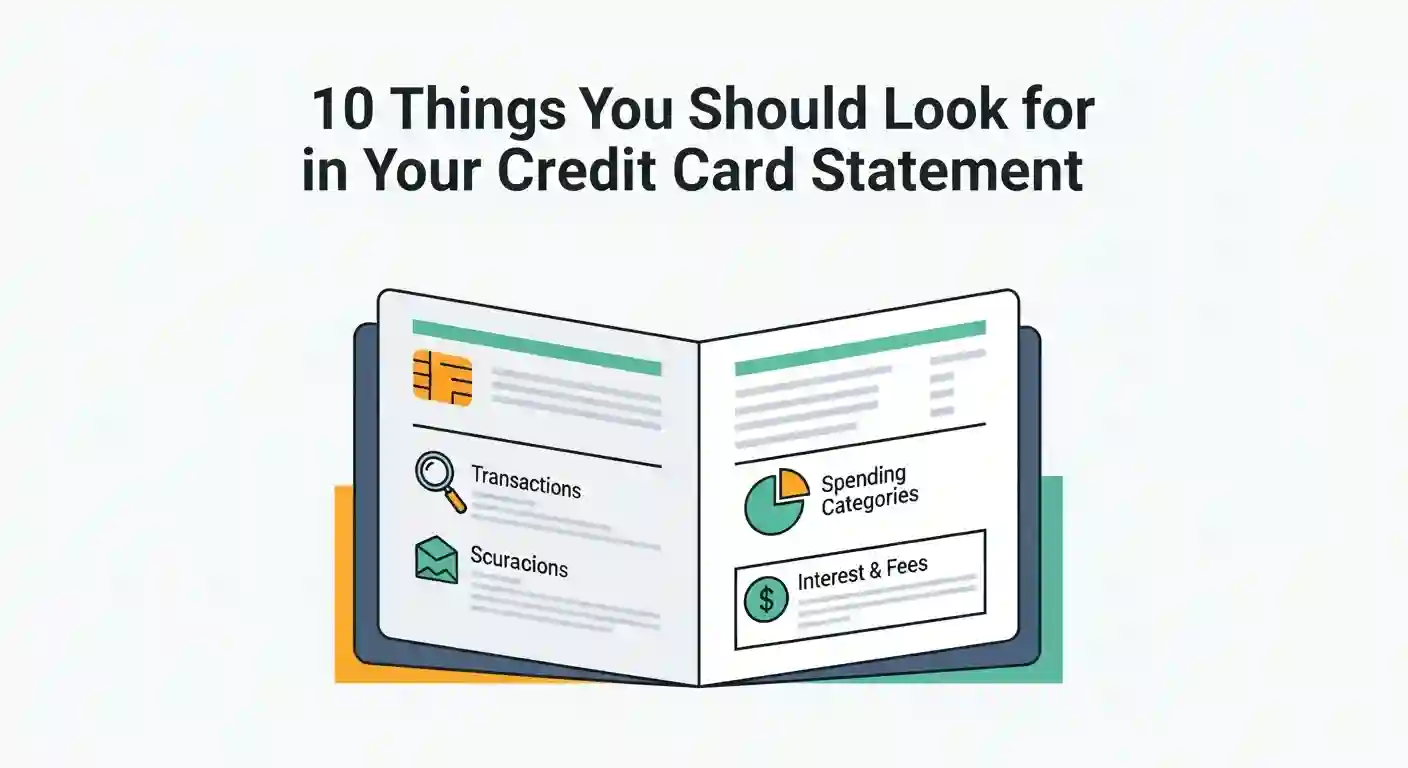
In this blog, we will take you through the 10 most important things you need to check on your credit card statement.
1. Account Overview
Think of the account overview as your statement’s “quick summary” section. It gives you a bird’s-eye view of your credit card activity.
Here’s what you’ll typically find:
- All transactions from the previous billing period
- Interest applied to any past due balance
- Fees and charges
- Your total amount owed
- Statement close date
- Your credit limit
- Days remaining in your billing cycle
Quick tip: Any purchases you make after the statement closing date won’t show up on your current statement. They’ll appear on your next one instead. Want to see those transactions right away? Simply log into your net banking account or digital wallet app.
2. Credit Limit Availability
Your credit limit is the maximum amount the bank allows you to spend on your card. Several factors determine this limit, including your income, credit history, and relationship with the bank.
If you’re new to credit cards, your limit will likely be on the lower side. That’s completely normal. As you use your card responsibly and build trust with your bank, your limit may increase over time.
A word of caution: Some card providers allow you to exceed your limit under certain conditions. However, this usually comes with additional fees. Banks generally recommend staying well within your limit to avoid falling into a debt trap.
Always check how much of your available credit you’ve used. This helps you plan your spending for the rest of the month.
3. Payment Due Date
This is arguably the most important date on your entire statement. Circle it, highlight it, set a reminder for it – do whatever it takes to remember it.
The payment due date is your deadline to pay your credit card bill. Miss it, and you’ll face late payment fees plus interest charges.
Here’s something many people don’t realize: Paying on the actual due date might not be the best idea. If you pay by check, the bank may take up to three business days to process it. If the payment doesn’t clear in time, you’ll still be charged a late fee.
Our advice? Make your payment at least 3-5 days before the due date. Better safe than sorry!
4. Total Amount Due
The total amount due is exactly what it sounds like – the full sum you owe to your credit card company. But it’s not just your purchases added up. It includes:
- Service fees
- Penalty payments (if any)
- Interest on unpaid balances
- Late fees from previous months
- Carryover amounts from past billing cycles
- Any other applicable charges
When you look at this number, you’re seeing the complete picture of what you owe. Paying this amount in full each month is the best way to avoid interest charges and keep your credit card debt at zero.
5. Minimum Amount Due
Can’t afford to pay the full amount this month? Card issuers give you the option to pay a smaller amount called the “minimum amount due.”
This minimum is usually just 3% to 5% of your total balance. Paying at least this amount helps you avoid late payment fees and keeps your account in good standing.
But here’s the catch: Paying only the minimum should be your last resort. Why? Because interest will be charged on the remaining balance. Over time, this can add up quickly and lead to a growing debt pile.
Think of the minimum payment as a safety net – use it only when you absolutely have to, not as a regular habit.
6. Banking Fees
Ever looked at your statement and thought, “Wait, why is my bill higher than expected?”
Hidden fees might be the culprit. Credit card companies charge various fees that can quietly inflate your bill. Watch out for:
- Late payment penalties – charged when you miss your due date
- Interest charges – applied on unpaid balances
- Foreign exchange markup fees – added when you use your card abroad or on international websites
- Cash advance fees – charged when you withdraw cash using your credit card
- Annual fees – yearly charges for holding the card
- Over-limit fees – applied if you exceed your credit limit
Always scan your statement for these charges. If you spot something unexpected, contact your bank immediately to clarify.
7. Grace Period
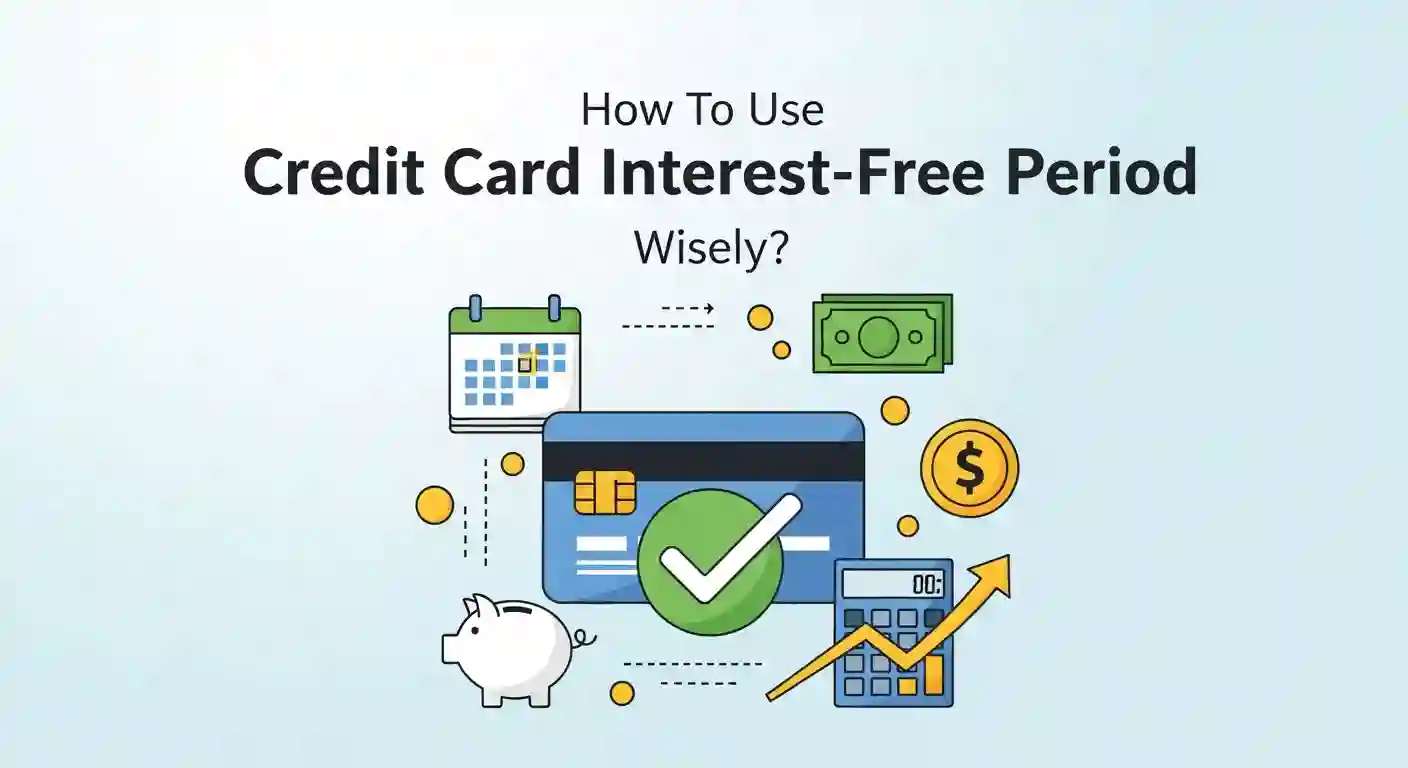
The grace period is your interest-free window to pay your credit card bill. It typically lasts 20-25 days after the billing cycle ends.
During this time, you can pay your full balance without any interest charges. It’s like a brief pause before the meter starts running.
Good to know: According to RBI regulations, banks can only charge you for a late payment if your amount remains unpaid for more than three days after the due date. However, once that window passes, interest kicks in – and it’s calculated from the original payment due date, not the end of the grace period.
So, use this grace period wisely. Pay on time, and you’ll never have to worry about interest.
8. Notice of Late Payment
Your statement includes a late payment warning section. This is essentially a heads-up from your bank, reminding you what happens if you don’t pay on time.
Under this warning, you’ll find:
- A reminder to pay at least the minimum amount
- Details about the late payment fee you’ll be charged if you miss the deadline
Don’t ignore this section! It’s there to protect you from unnecessary penalties. Consider it a friendly nudge from your bank.
9. Points/Cashback for Rewards
Here’s the fun part of your credit card statement!
Most credit cards offer rewards in the form of cashback or points on purchases. Your statement tells you how many rewards you’ve earned during the billing cycle.
Why does this matter? Reward points often come with an expiry date. If you don’t redeem them in time, you lose them. By keeping track of your rewards through your statement, you can:
- Know exactly how many points you have
- Plan when and how to redeem them
- Make sure they don’t expire unused
Whether you prefer cashback, gift vouchers, or air miles, staying on top of your rewards helps you get the most value from your credit card.
10. Transaction Information
Last but definitely not least – review every single transaction on your statement.
The transaction section lists all purchases, payments, and other activities on your card during the billing cycle. Each entry typically shows the date, merchant name, and amount.
Why is this so important?
First, mistakes happen. The bank might have charged you twice for something, or a merchant might have billed you incorrectly. Catching these errors quickly means you can dispute them and get your money back.
Second, checking transactions helps you spot fraudulent activity. If someone has used your card without your permission, your statement is where you’ll first see the evidence.
Third, reviewing your spending helps you understand your habits. Are you spending too much on dining out? Is that subscription service still worth it? Your transaction history holds the answers.
Make it a habit to go through this section carefully every month.
Wrapping Up
Your credit card statement might seem like just another piece of paper (or email) to deal with. But it’s actually a powerful tool for managing your money.
To recap, here are the 10 things you should always check:
- Account Overview
- Credit Limit Availability
- Payment Due Date
- Total Amount Due
- Minimum Amount Due
- Banking Fees
- Grace Period
- Notice of Late Payment
- Points/Cashback for Rewards
- Transaction Information
Your credit card company sends you a statement once a month, shortly after your billing cycle ends. Make it a habit to review it as soon as it arrives. This simple practice can save you from unexpected fees, help you spot fraud early, and give you a clearer picture of your financial health.
Understanding your credit card statement isn’t difficult – it just takes a little attention. And that small effort can make a big difference in how well you manage your finances.
Learn More:
- How to Transfer Home Loan from One Bank to Another?
- How to Pay Electricity Bill through Credit Card
- How to Increase Credit Card Limit
- Home Loan Benefits for Women in India
- Best Banks for Gold Loan in India 2025
- Get SBI Yono Personal Loans? Helpful Tips to Get the Loan Fast
- 7-step checklist for fast ICICI Bank personal loan approval
- Airtel Payment Bank Loan: How to Get a ₹5,000 Loan in Just Minutes